
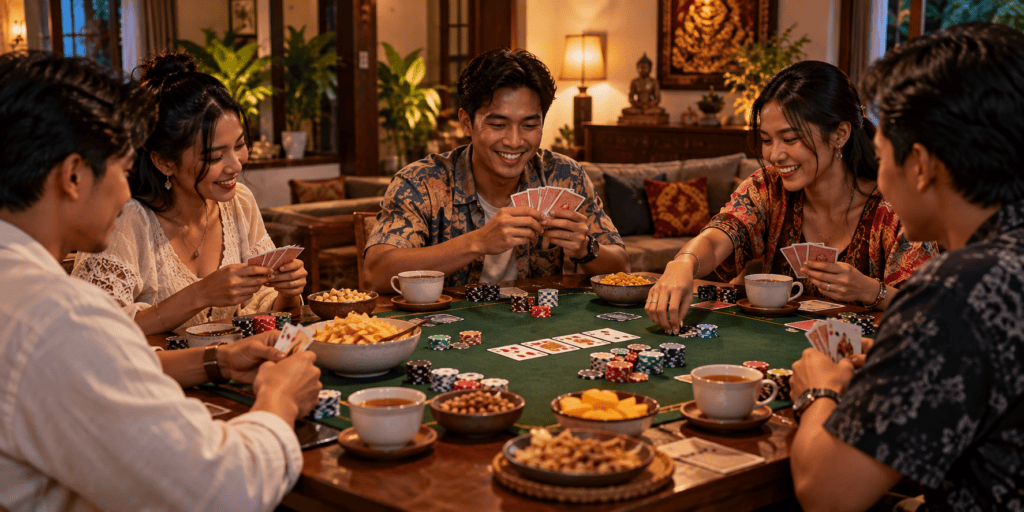
A board game party works best when the food is ready, the table is clear and nobody spends the first hour reading a rulebook. Plan two main games and leave room for a quicker round if the evening runs smoothly. Pick snacks that can be eaten between turns, not over the cards. With a little preparation, both the menu and the games can feel generous without making the host work all night.
Games that fit the table
Start with the guest count, not a favourite box. Just One suits three to seven players, while Sushi Go Party accommodates up to eight. Keep a standard deck nearby: poker and blackjack work as short rounds with chips used as counters, not money.
During a break, someone who enjoys online blackjack might sign in through cambodia.1xbet.com/en/user/login on a phone, while the next round is prepared. At the table, agree on the dealer, the scoring and how many hands to play before starting. That keeps the card games as approachable as the board games.
If more people arrive than one box allows, divide the room into two tables. Give each group a game it can finish independently rather than leaving half the guests waiting for their turn. Keep the opener short enough for late arrivals to join the next game without interrupting play.
Snacks that belong beside a game board
Mini wraps, cheese cubes, vegetable sticks and small sandwiches are easier to manage than a meal requiring knives and plates on laps. Put dips and anything sticky on a separate counter, away from the cards. For a longer evening, include something filling and one lighter option, then replenish bowls between games. Choose foods that can be portioned before guests arrive; a tray of cut wraps is easier to serve than anything requiring last-minute assembly or cooking.
A simple menu can follow the rhythm of the night:
| When | Food | Why it works |
| Arrival | Mini sandwiches | Easy to eat before play |
| First break | Vegetables and dip | A fresh option away from cards |
| Longer pause | Warm savoury bites | More substantial without a full meal |
| Last round | Fruit and crackers | Little preparation or cleanup |
Leave napkins at both tables and keep tea, coffee and water on a side surface. A spill is less likely when players do not have to reach over a crowded board for their drinks. Check dietary preferences beforehand, so nobody is left assembling a meal from garnish.
A little variety between the longer rounds
Opening with a cooperative game helps people settle in without worrying about who is ahead. After that, offer a choice: a quick drafting game, a longer strategy session or a few hands of poker. If the group chooses blackjack, rotating the dealer gives different guests a turn running the table. Use a fixed number of hands rather than stretching the game until everyone loses interest.
Poker introduces bluffing and reading opponents, while blackjack offers simple decisions about drawing or standing. Neither requires cash stakes for the evening to be entertaining. Keep a simple chart of poker hands nearby and agree on blackjack rules before dealing, especially if a few guests are learning the games. Keep the shared cards, snacks and conversation at the centre.
Before the first game, sort out a few details that prevent interruptions:
- Check the player count and put spare chairs within reach.
- Set out pens, score sheets, chips and any missing game pieces.
- Explain unfamiliar rules with one example turn.
- Clear empty plates before dealing the next hand.
A relaxed finish, without another long rulebook
Keep the last part of the evening flexible. A rematch of the most popular game may be more appealing than opening something nobody has tried. If two groups finish at different times, let one begin a short card round while the other completes its game. There is no need to stop everyone at the same moment.
Give yourself a few minutes between rounds to refill food, wipe the table and pack unused components away. Keep score with counters or chips rather than cash, so nobody feels obliged to put money into a game. After a few hands, count the chips, shuffle the deck and let someone else choose what comes next.
A clear table, finished games and snacks within easy reach are better signs of success than a timetable followed down to the minute. A manageable menu, clear rules and a few games with different moods make that possible without an elaborate schedule.