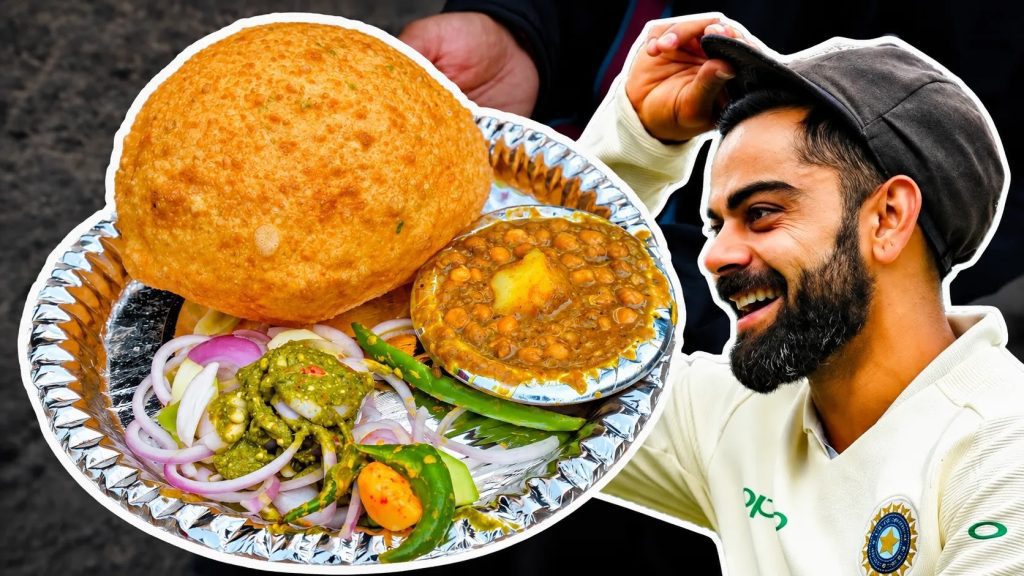
Virat Kohli eats about as carefully as anyone in cricket. One Delhi dish still pulls him back, though: chole bhature, the food of his childhood. What follows is the dish’s story, a look at his plate today and a recipe for home. Cooking it for match day? Then it is worth getting the Betwinner login sorted before the first ball.
Introduction: Virat Kohli and Indian Food Culture
Food carries real weight in India. Families guard old recipes, cities fight over whose version is right, and one plate can reveal a person’s home state. Cricket matters just as much, so fans end up curious about what their heroes eat. For those who like to back Kohli’s form with a wager, it is worth opening https://guidebook.betwinner.com/account/ to sort out account details before match day.
Anyone eating in an Indian home soon notices a few things:
- Food is shared. Dishes go in the middle and everyone reaches in.
- Each region guards its own cooking: Punjab its tandoor, the South its rice and lentils.
- Meat is optional. Pulses, grains, vegetables and dairy carry most meals.
- Street food is social. People eat it standing at a stall, usually with friends.
Kohli fits neatly into this picture. His love for chole bhature is common knowledge. Prime Minister Narendra Modi even teased him about it during the Fit India Dialogue video call in 2020, asking whether he missed it. For someone so disciplined, it is a nice human detail.
What Is Chole Bhature?
Two things share the plate. Chole is a chickpea curry, cooked down with onion, tomato and plenty of spice until it goes dark brown. Bhature is fried bread made from leavened refined flour, and it puffs up in the oil into a soft, slightly chewy round. Stalls usually add pickled onions and green chillies, and a lot of people order lassi with it.
Origins of the Traditional Punjabi Dish
Where it started is still argued over. Most people say undivided Punjab, though Uttar Pradesh claims it too, and spiced chickpeas date back to the Mughals. What is clear is that Punjabi refugees carried the pairing to Delhi after Partition in 1947. Sita Ram and his son Diwan Chand, along with Peshori Lal Lamba of Kwality, still come up whenever locals argue about who served the city’s first plate.
Why Is It Popular in India?
Few dishes cross India’s social lines so easily. A plate at a roadside stall costs very little, but posh restaurants serve it as well. Either version keeps a person full long after lunch.
Delhi locals explain its staying power simply:
- Cheap, and enough to keep a student or office worker going until evening.
- No meat, so vegetarian families order it happily.
- Good at any hour: breakfast, brunch, a 4 pm snack.
- Linked to festivals, Sunday outings and cold winter mornings.
Delhi remains its home turf, where family-run shops draw queues out the door. By the 2010s it had spread across the country as fast food, from city food courts to roadside dhabas in small towns.
Virat Kohli’s Food Preferences
Kohli’s appetite has changed sharply over his career. As a young player he loved butter chicken and fast food and never hid it. That began to shift around 2013, when diet became part of his training. Then came 2018: health problems on the South Africa tour pushed him to give up meat. He once had to set the record straight on social media: vegetarian, yes, but not vegan.
What Does Virat Kohli Eat?
His everyday menu is plain by choice. By his own account, roughly 90% of what he eats is steamed or boiled, with no spices at all. Eating the same meal three times a day for six months would not bother him, he has said.
Day to day, that means:
- Lentils, beans, quinoa and tofu for protein.
- Greens and other vegetables, mostly steamed.
- Simple dal and roti in the evening.
- Very little dairy and no added sugar.
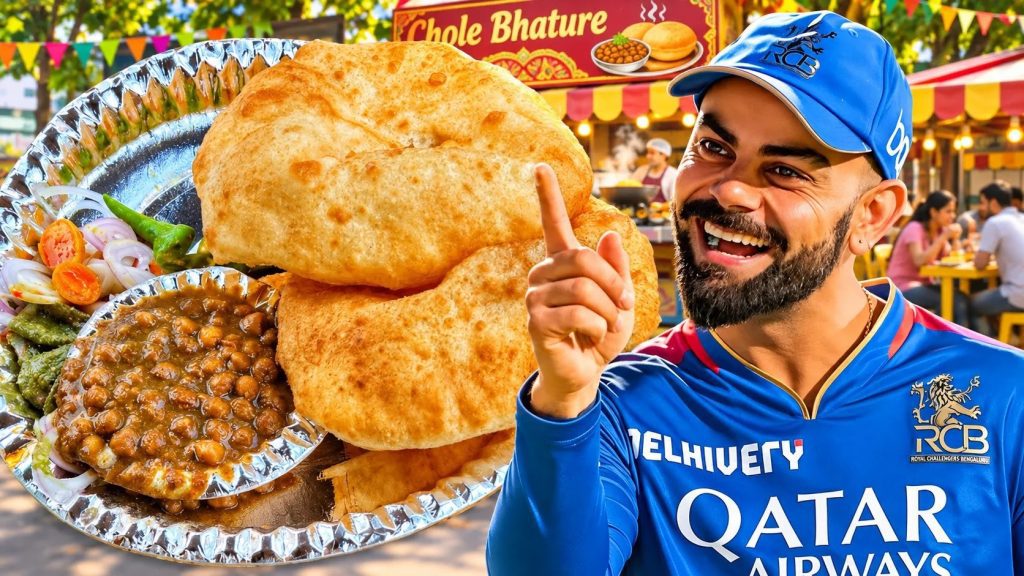
His treats are rare and almost always Indian. At the top sits chole bhature, from Rama Chole Bhature in Delhi or Civil Lines Wala in Gurugram, and rajma chawal is not far behind. His wife, Anushka Sharma, has even let slip that he watches videos of the dish in his spare time.
Indian Food and Professional Athletes
Plenty of other Indian sports stars share Kohli’s weakness for food from home. Many grew up on street snacks or their mothers’ recipes and still go back to them, though mostly as a planned reward rather than an everyday meal. All that fan attention keeps the betting niche busy too, and anyone planning to buy or sell a casino affiliate site there is better off working through a specialised broker.
| Athlete | Sport | Favourite Indian food | Place in their routine |
| MS Dhoni | Cricket | Butter chicken | Early in his career, ordered it with naan and a milkshake for both lunch and dinner; former teammate Robin Uthappa says he sometimes ate only the gravy |
| Rohit Sharma | Cricket | Vada pav, pav bhaji | Says he ate vada pav nearly every day early on; lately he says no when fans offer one |
| Sachin Tendulkar | Cricket | Vada pav, prawns and fried fish | Rates his mother’s cooking above everything; still goes for the vada pav at Shivaji Park Gymkhana |
| Neeraj Chopra | Javelin | Churma (crushed roti, ghee and sugar) | Saved for breaks back home in Haryana, often with golgappa on the side |
| PV Sindhu | Badminton | Hyderabadi biryani | Off limits under coach Pullela Gopichand; these days she has it once in a while |
Traditional Chole Bhature Recipe
This one takes planning. The chickpeas sit in water overnight and the dough rests for a few hours, but there isn’t much actual work. The version below feeds 4 and sticks close to what Delhi stalls sell.
Ingredients for Chole and Bhature
Any Indian grocery will have everything here.
For 4 people:
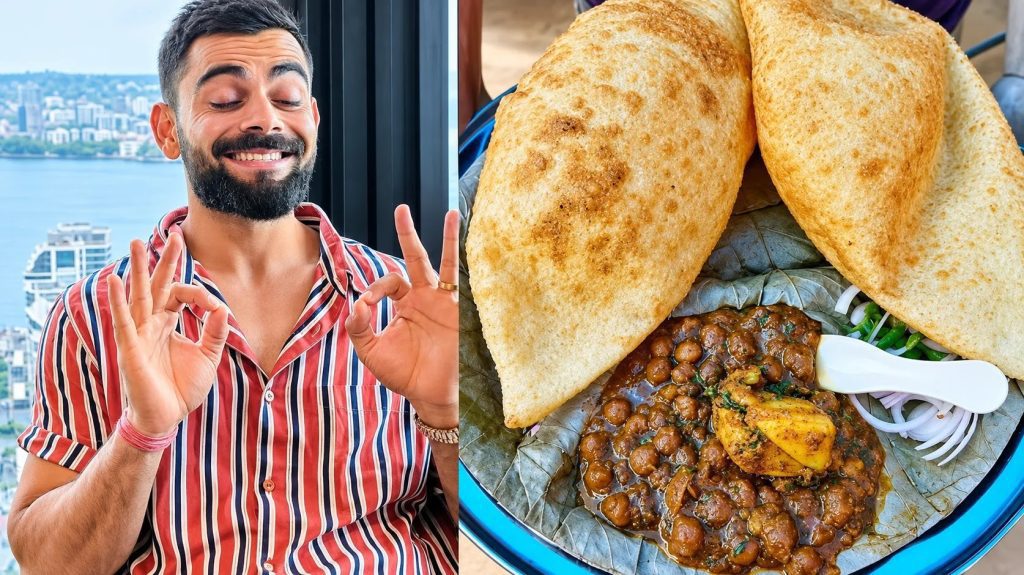
- Chole: 250 g dried white chickpeas, 2 onions, 2 tomatoes, 2 green chillies, 1 tbsp ginger-garlic paste.
- Spices: 2 tbsp chole masala, 1 tsp cumin seeds, 1 bay leaf, salt.
- 1 black tea bag, for the dark colour.
- Bhature: 250 g maida, 120 g plain yoghurt, 1 tsp sugar, ½ tsp each of baking soda and salt.
- 3 tbsp oil or ghee for the curry, plus more oil for frying.
Some households like it sourer and add a pinch of amchur or anardana powder. Others put a spoonful of semolina in the dough, which makes the bhature crisper.
How to Prepare Chole (Chickpea Curry)
Slow cooking is where the flavour comes from, so this part shouldn’t be rushed.
It goes in 4 stages:
- The chickpeas soak for 8–10 hours in plenty of water and then get drained.
- Into the pressure cooker they go, with fresh water, salt and the tea bag, for 4–5 whistles. A cooked one squashes easily between two fingers. Old chickpeas take longer.
- Cumin and the bay leaf go into hot oil, then chopped onions until deep golden. After that come the ginger-garlic paste, chillies, tomatoes and chole masala.
- The chickpeas join the pan with some cooking water and simmer for 15–20 minutes. Crushing a handful against the side thickens the gravy.
The tea bag comes out first. Good chole is thick enough to stick to bread and finishes sharp and a bit sour.
How to Make and Fry Bhature
Bhature need a soft dough and hot oil. Skimp on either and they come out flat.
Here is the order:
- Flour, baking soda, sugar and salt get mixed, then the yoghurt goes in. A little warm water brings it into a soft, smooth dough that doesn’t stick.
- It gets rubbed with 1 tbsp oil, covered and left somewhere warm for 2–3 hours.
- Next it is cut into 8 balls, each rolled into an oval about 5 mm thick.
- They fry one by one at around 180°C. Light pressure in the centre with a slotted spoon makes them balloon; after one flip, they come out light golden.
Paper towels take care of the extra oil. Oil that is too cool makes greasy bread, and oil that is too hot colours the outside before the bhatura can puff.
How to Serve Chole Bhature
Serve them fast. Bhature begin to sag within minutes, so timing counts for more than presentation.
A full plate normally has:
- 2 bhature each, hot from the oil.
- Chole in a deep bowl with coriander and a little butter on top.
- Onion rings with lemon and a slit green chilli.
- Some mango or mixed achar.
Lassi, salted or sweet, cools things down. Leftover chole lasts 2 days in the fridge, and many say it’s better the next morning.
Nutritional Value of Chole Bhature
Nutritionally, it is a mixed plate. Chickpeas bring plant protein, fibre, iron and folate, while the fried bread brings quick carbs and most of the fat. The final numbers swing with oil temperature, portion size and the number of bhature eaten.
Calories and Nutritional Benefits
A modest home portion is about 427 kcal, with around 11 g of protein, 50 g of carbs and 20 g of fat. Street and restaurant plates often go up to 600–800 kcal. It fills people up for hours, which is why most eat it as a full meal and not a snack.